


FIELD NOTES
The scariest thing for our readers this Halloween might be the market correction this past week.
With the US midterm elections just days away, political uncertainty is adding to an already nervous market. The Nasdaq fell roughly 5.2% in October. Alphabet lost 12.6% in a single day after earnings, while Intel plunged nearly 29% on Friday.
But beyond the election jitters, investors are getting nervous about the extraordinary amounts being spent on AI infrastructure.
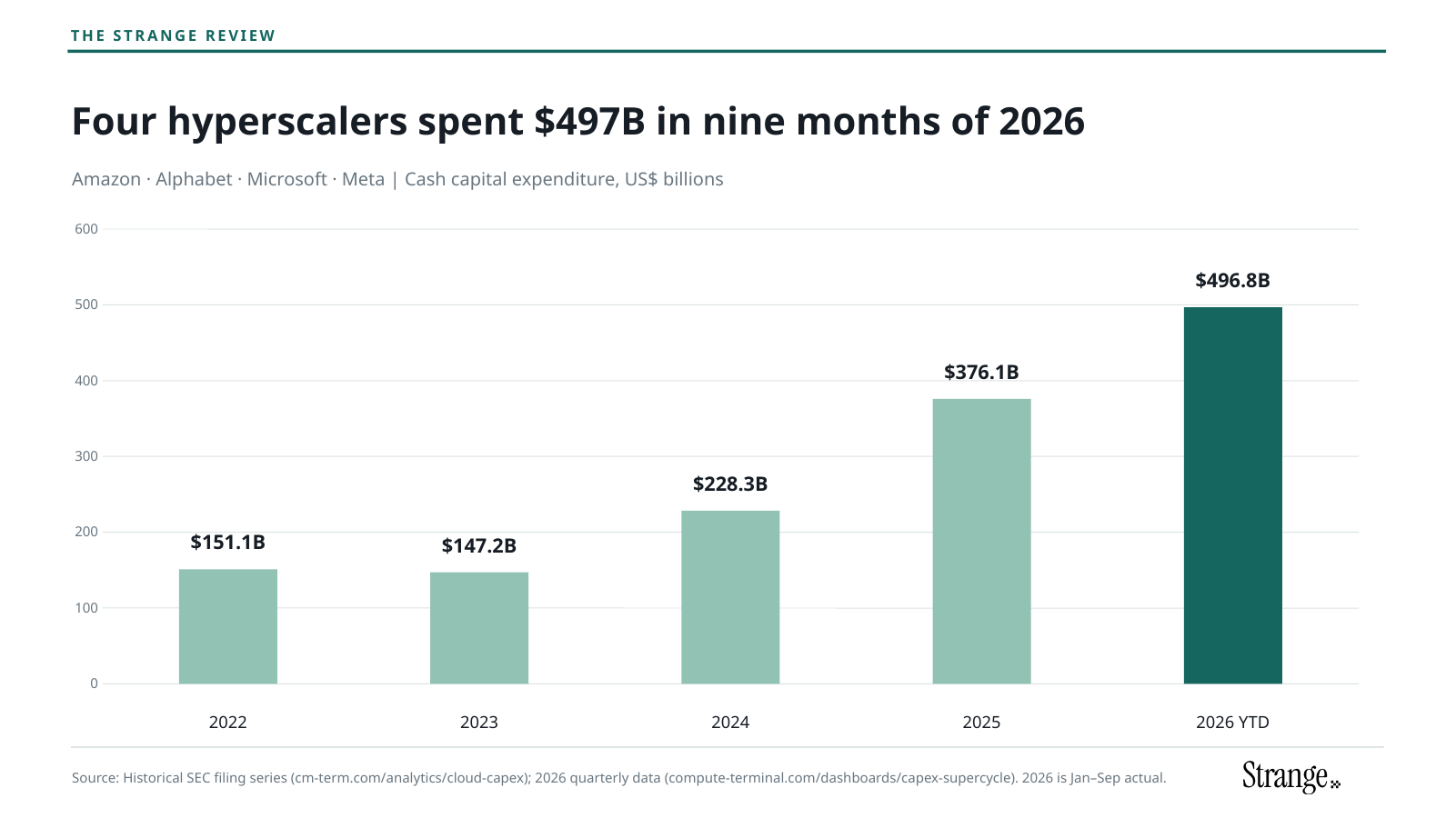
Big Tech hyperscalers like Amazon, Microsoft, Google and Meta collectively spent approximately $151 billion on capital expenditure in 2022. By 2025, that had grown to $376 billion. In the first nine months of 2026 alone, the four spent nearly $497 billion.
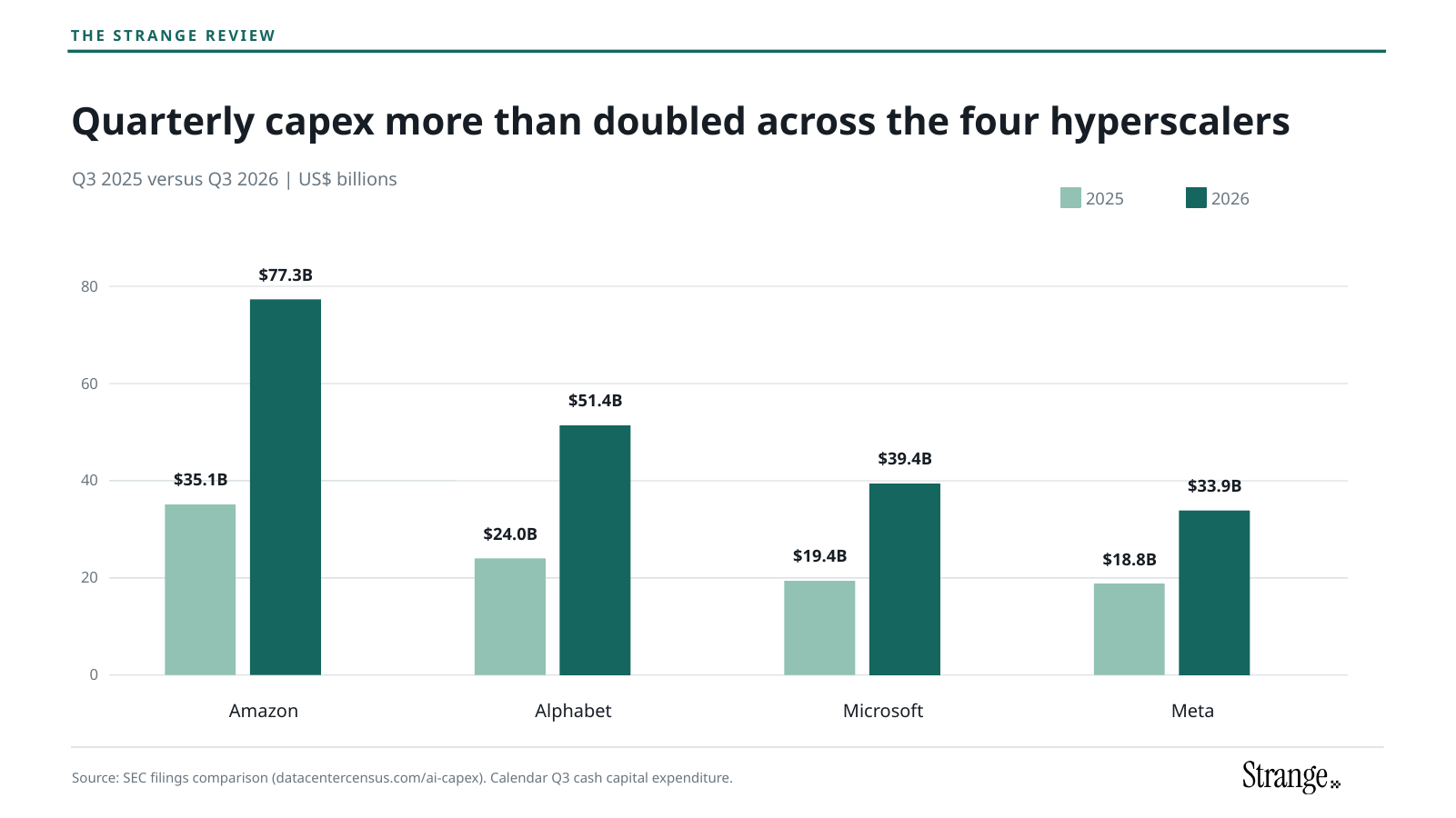
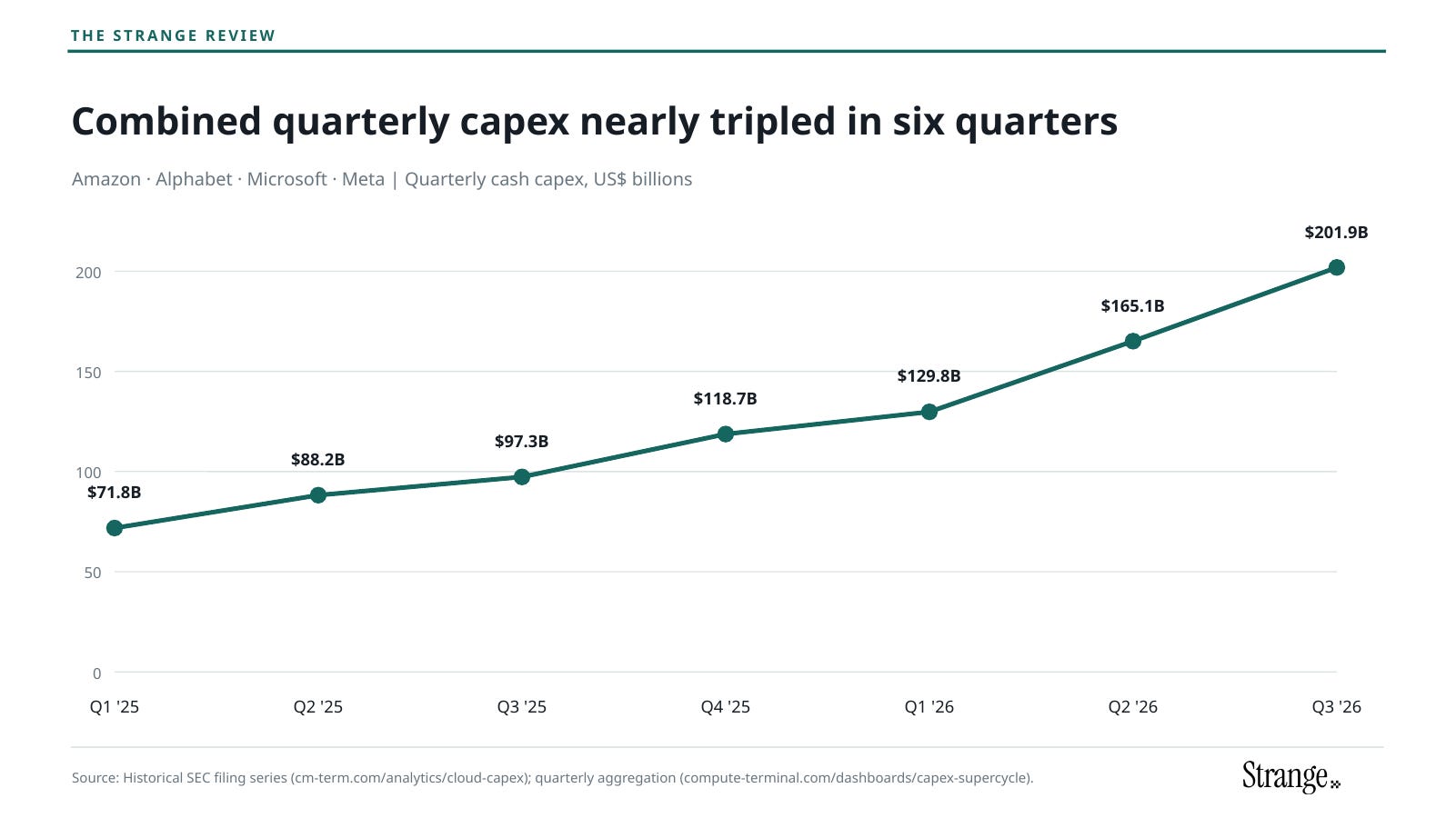
In the third quarter alone, they spent $202 billion, more than in the entirety of 2022.
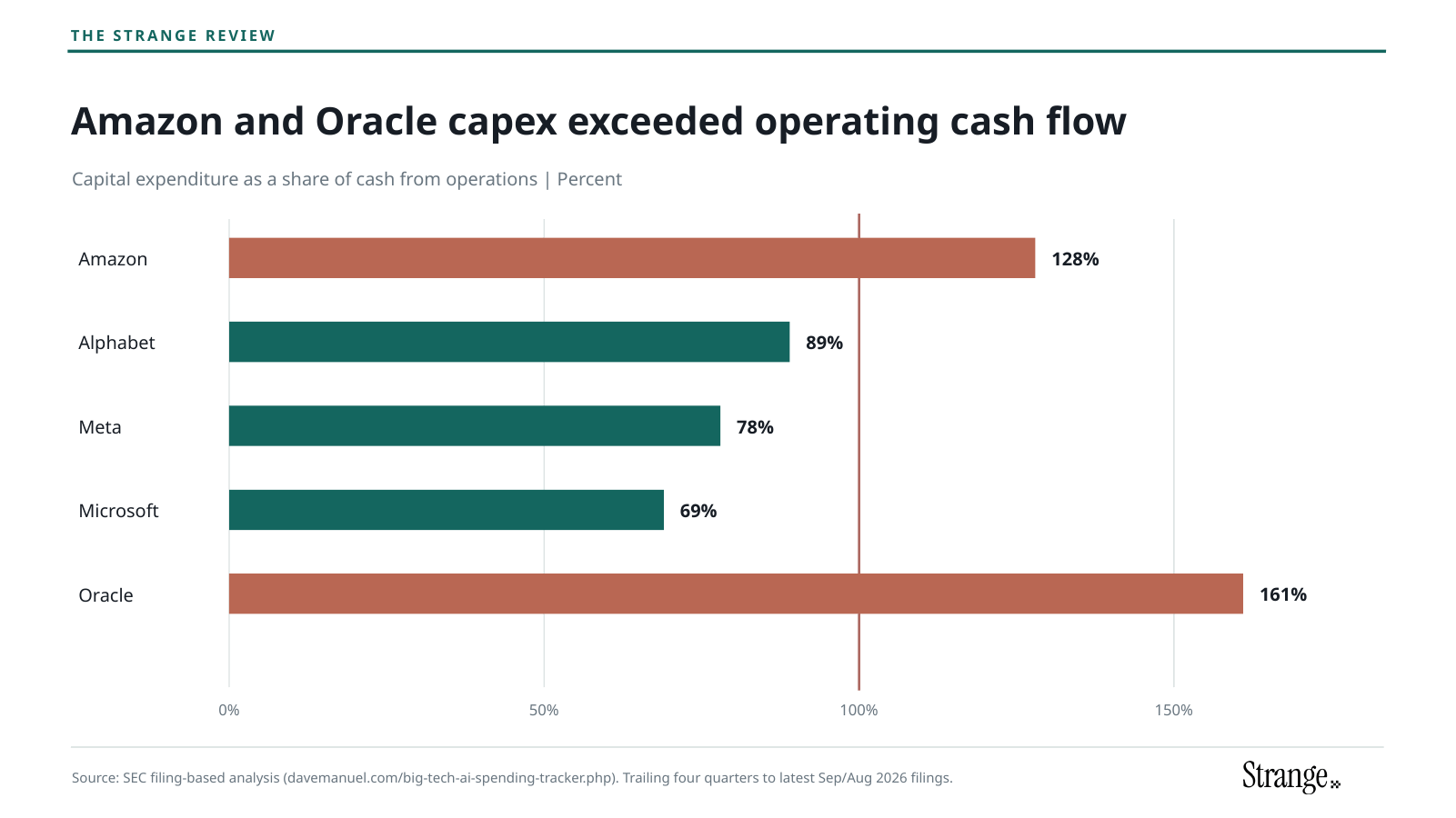
And the spending is accelerating. Together, these companies spent more than $2 billion a day on capital equipment last quarter. For some, capital expenditure now exceeds the cash generated by their operations.
There’s an interesting historical parallel that might be giving investors night terrors. In the late 1990s, telecom giants like AT&T and WorldCom, alongside ambitious newcomers such as Global Crossing, Qwest, Level 3 and Williams Communications, poured billions into laying fiber-optic networks for the growing internet.
Capital spending among major telecom providers rose from $42 billion in 1997 to $77 billion in 2001. Two years later, it had nearly halved. Many of the infra builders like Global Crossing, WorldCom and Williams Communications went bankrupt, bandwidth prices collapsed, and much of the infrastructure eventually became the foundation for the next generation of internet businesses.
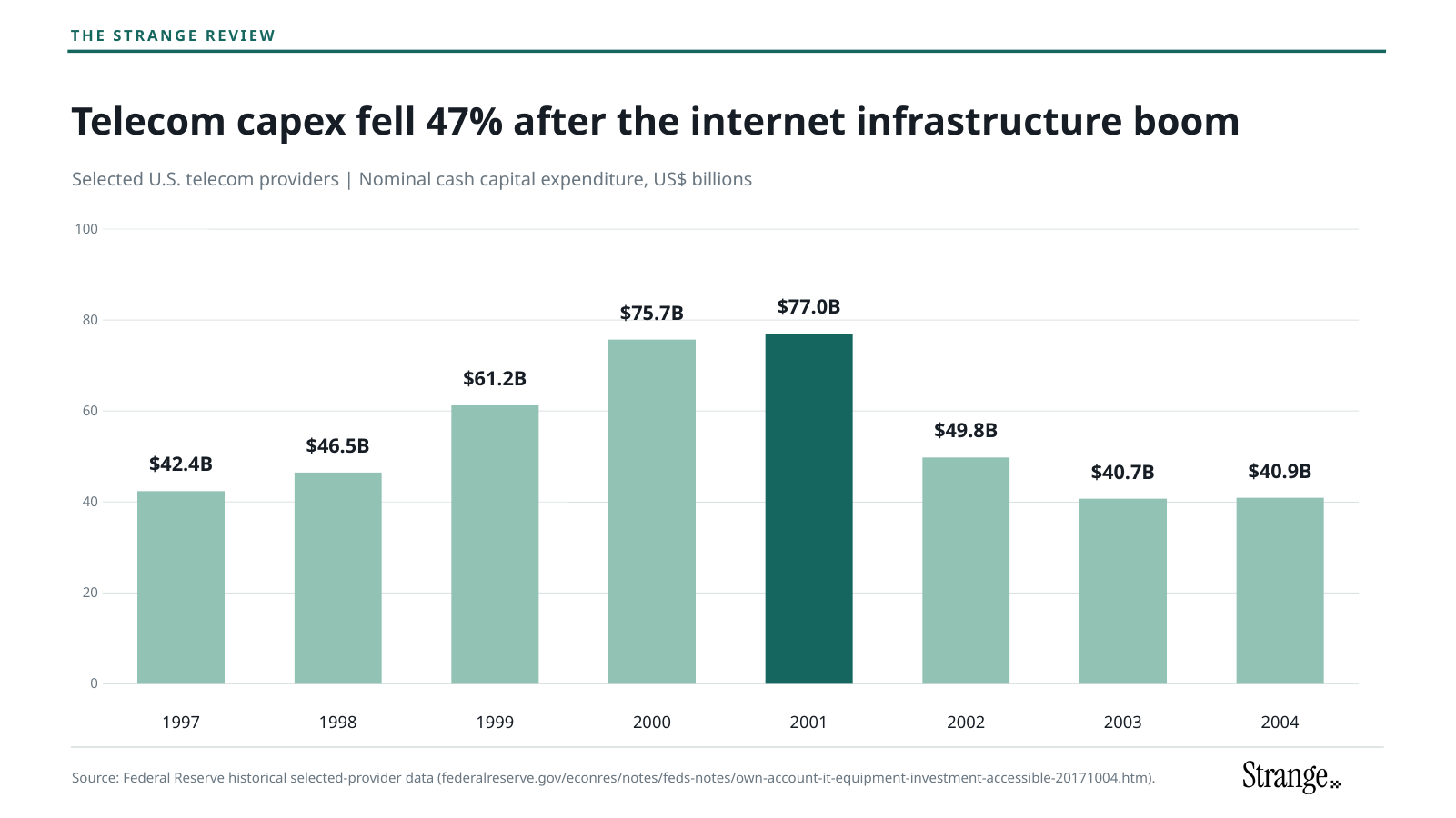
There are important differences. Today’s infra builders (Amazon, Microsoft, Google and Meta) are among the most profitable companies in history, rather than heavily indebted telecom upstarts. Demand for AI compute is real and growing. But GPUs can lose economic value much faster than fiber.
I don’t think this necessarily means that we’re headed for another dot-com crash. It’s more that a technology can transform the world while destroying enormous amounts of investor capital along the way.
-Tara
THE DOWNLOAD
Google DeepMind releases Genie 4, an interactive world model
Google DeepMind introduced Genie 4, a world model that generates interactive environments in real time, complete with sound, characters and dialogue.
Unlike conventional video generation, users can navigate and modify these environments as they unfold, like changing the weather, introducing characters or objects, and watching the world respond. Gemini models help maintain continuity and guide more complex sequences.

The potential extends beyond games and synthetic video. Such environments could eventually provide AI agents and robots with an enormous variety of simulated experiences to learn from.
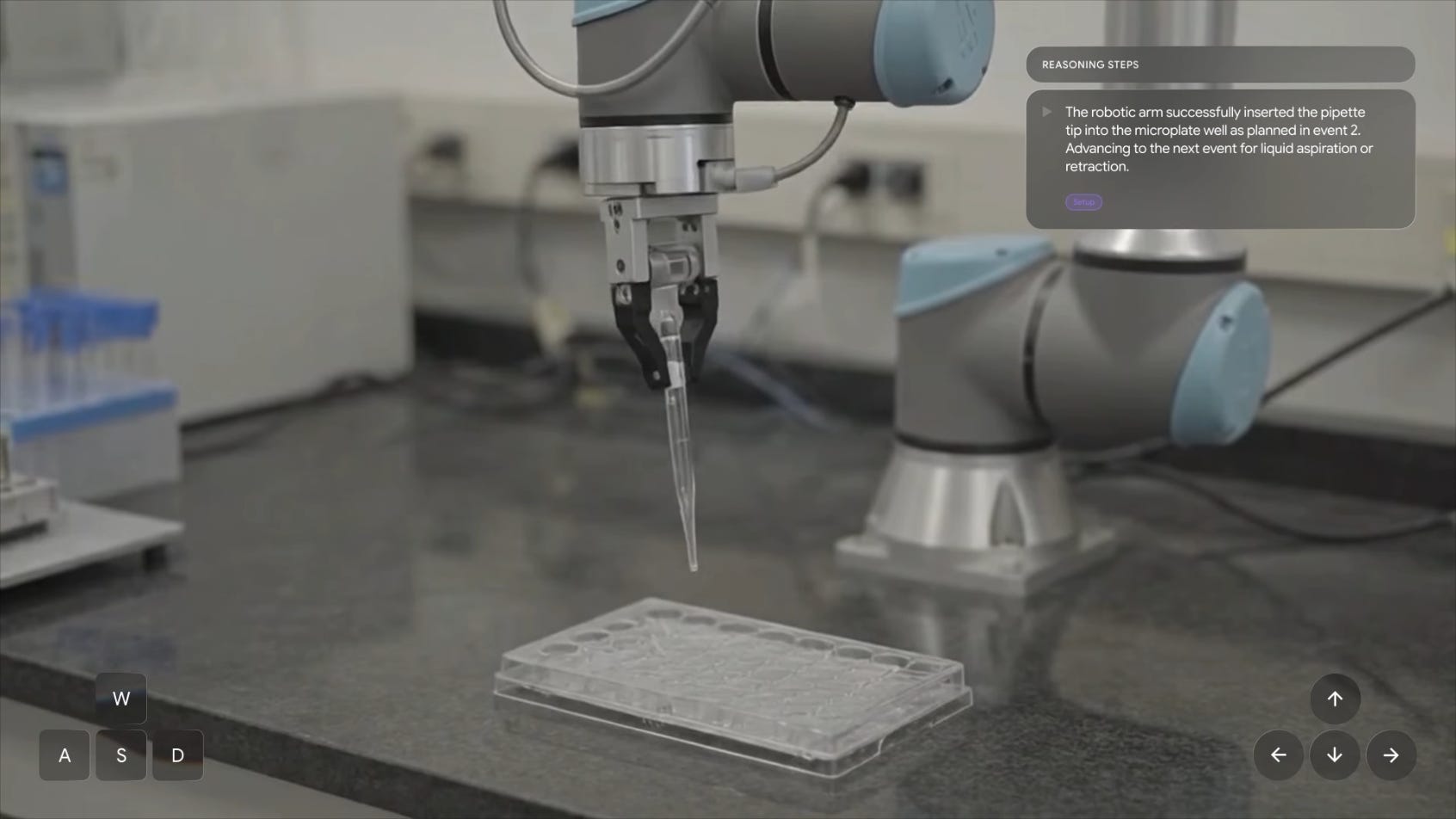
It’s still evolving. DeepMind acknowledges that object permanence, spatial consistency and complex physics can still drift, particularly over longer sessions. Genie 4 is currently available to selected research testers.
Broadcom and Wall Street’s $63B AI-chip financing
Bank of America, Citi, Morgan Stanley and Blackstone announced a $63 billion financing structure to purchase Broadcom AI accelerators and networking equipment for Anthropic.
A special-purpose vehicle will acquire the hardware and lease it to Anthropic, with deliveries expected from 2027. The unusual feature is Broadcom’s residual-value support for the senior financing, helping protect lenders if the equipment is worth less than expected.
This matters because AI accelerators are enormously expensive and can lose economic value quickly as newer generations arrive.
Why it matters: Compute is becoming an asset-financing business. Who bears the risk when expensive hardware loses value faster than expected?
Google runs an AI model on a TPU in space
Google’s Project Suncatcher satellite successfully ran Gemma 4 on an orbital TPU this week, generating a haiku from a ground-station prompt and transmitting it back to Earth.
It’s a modest computation, but an important milestone: Google has demonstrated a modern data-center-class AI accelerator operating in orbit.
The longer-term ambition is to build AI infrastructure in space, where solar energy is abundant and computing wouldn’t consume terrestrial land and water.
The engineering challenges remain enormous. The satellite can operate only a fraction of its onboard computing capacity at once, while radiation, cooling, communications and power constraints all need further testing. Google plans to test two interconnected satellites in 2027.
Anthropic publicly files its S-1
Anthropic filed its S-1 this week, giving investors their first official look at the economics of one of the fastest-growing AI companies.
The numbers are extraordinary:
$16.3B in revenue in the first half of 2026, up roughly 14-fold year over year.
$8.9B in compute and infrastructure expenses over the same period.
$693M operating loss, down from $2.1B a year earlier.
$3.9B in positive operating cash flow.
The filing also reveals the tension beneath that growth: enormous long-term compute commitments, some requiring payment regardless of utilization, against revenue that remains largely consumption-based.
Anthropic is showing improving operating economics, but staying competitive requires increasingly industrial-scale investment. We explored the broader economics in our previous breakdown.
ALSO
OpenAI claims an AI-generated proof disproves a foundational complexity hypothesis. OpenAI published a purported refutation of the Exponential Time Hypothesis, a widely held assumption about the difficulty of solving computational problems. Closely related to P vs NP, it would overturn decades of theoretical assumptions if validated, but it does not prove P = NP. The result has been formalized in Lean, with independent mathematicians now examining its implications.
PsiQuantum demonstrates a low-loss optical circuit switch. PsiQuantum unveiled an 8×8 optical switch reporting just 1.2 dB typical insertion loss and under 3 ms reconfiguration. Developed using its silicon-photonics platform for quantum computing, the technology could eventually help AI data centers connect GPUs with less electrical conversion overhead. Scaling beyond the laboratory prototype remains to be demonstrated.
Google researchers introduce a sleep cycle for language models. A new research framework alternates active learning with offline memory consolidation, helping models absorb new information while reducing catastrophic forgetting. Researchers report retaining information across contexts of up to 10 million tokens, pointing toward models that can keep learning after deployment.
A real-world robot study tests how much demonstration data is enough. Researchers ran 1,340 physical-arm trials comparing robot-learning policies. In one setting, a smaller policy trained from scratch outperformed a larger pretrained alternative with 100 demonstrations, raising questions about when additional pretraining beats better task-specific data.
Google announces a security-focused frontier model. Gemini 4 Carbon targets cybersecurity and long-running software tasks, initially through restricted access. Its security performance claims remain largely vendor-reported.
Intel plunges as manufacturing disruptions and rising memory costs squeeze the chipmaker. Intel shares tumbled after weak guidance, manufacturing bottlenecks and a fatal factory explosion in Israel expected to reduce revenue by roughly $600 million over two quarters. The company is struggling to meet strong AI-server demand even as rising memory prices weaken its PC business.