


AI is fast expanding what scientists can search, design, and test. Over $11 billion in venture funding has poured into AI/ML drug-discovery in 2025 alone. As discovery becomes more powerful and therapies more complex, the question of how to produce them becomes increasingly consequential.
Some of the most advanced medicines in the world are still manufactured by hand. In cell therapy, technical operators work through dozens of delicate steps inside cleanrooms: moving bags of cells between instruments, connecting tubing, drawing samples, adding reagents, counting cells. The product is biological, the process is unforgiving, and a mistake can mean losing a patient’s dose.
It is extraordinary science running on surprisingly manual infrastructure.
“The pharmaceutical factory of the future should look more like a semiconductor factory: a large cleanroom with robots doing the work. Today, it’s manual, impossibly slow, and full of errors.”
— Fred Parietti, CEO, Multiply Labs
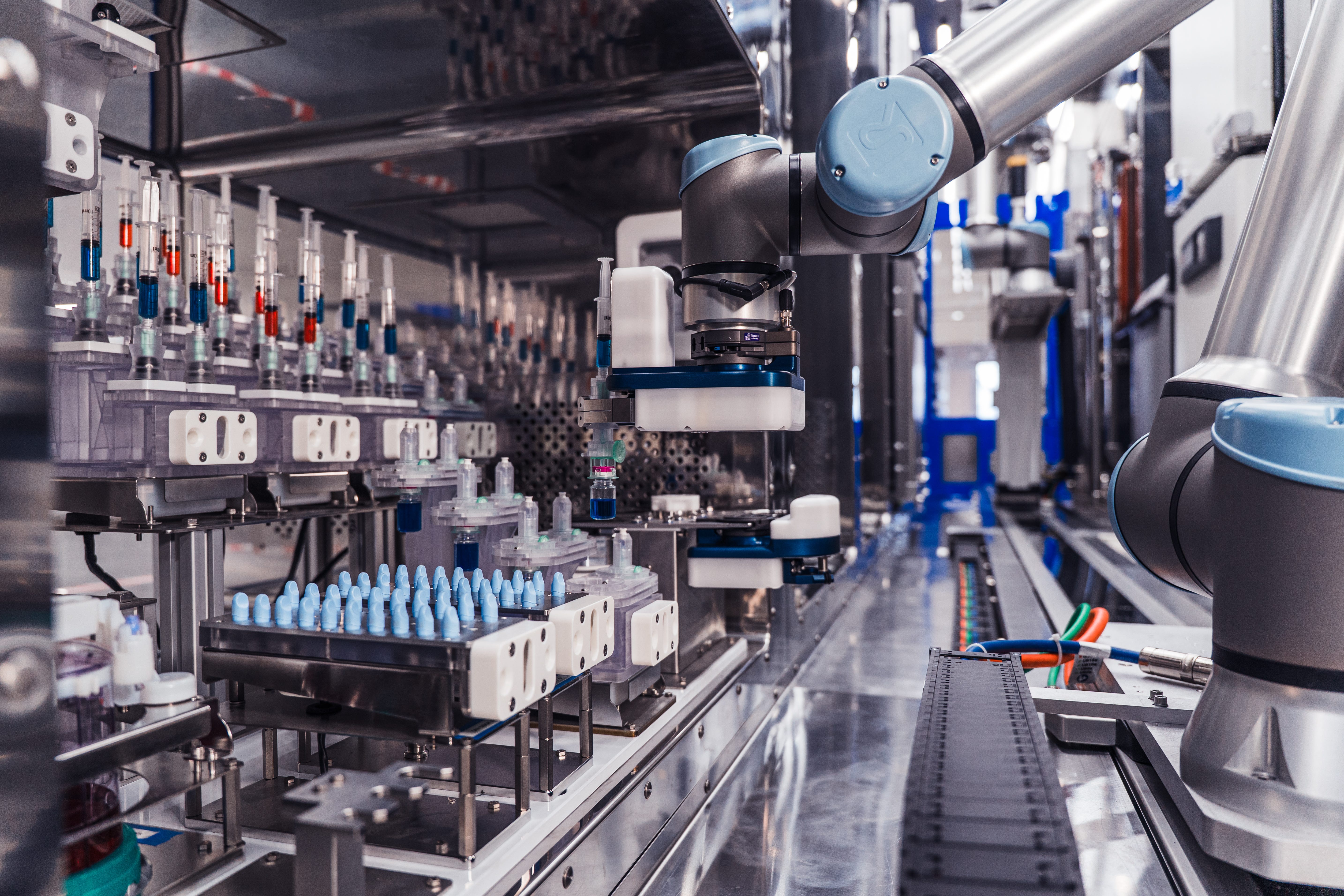
That is the problem Multiply Labs is solving.
When I first met founder Fred Parietti during his PhD at MIT almost 12 years ago (!), he was building robots with extra limbs designed to extend what the human body could do. The machines were wonderfully complicated: multiple robotic systems moving together, each action dependent on the next.
Years later, his co-founder, pharmaceutical scientist Alice Melocchi, introduced him to the pain of manufacturing medicine.
Fred had imagined pharmaceutical production would look something like semiconductor manufacturing. Think highly automated facilities producing enormously complex products with extraordinary precision. Instead, in advanced biologics, he found skilled scientists still performing painstaking manual work.
Multiply Labs grew out of a deceptively simple question: what if robots could do it instead?
Not by asking pharmaceutical companies to throw away the processes they had spent years developing. Multiply builds its robots around the instruments, consumables and workflows already used inside pharmaceutical manufacturing facilities.
Its robotic clusters bring multiple arms and manufacturing instruments together inside a closed system. The robots move materials between machines, manipulate bags and syringes, take samples, perform transfers and execute the sequence of steps that would otherwise require skilled human operators. Multiply says its systems can automate more than 50 unit operations and increase throughput per square foot by as much as 100x.
A single manual cell therapy line produces an average annual throughput of roughly 10,000 doses. The waitlist for the medicine is orders of magnitude more.
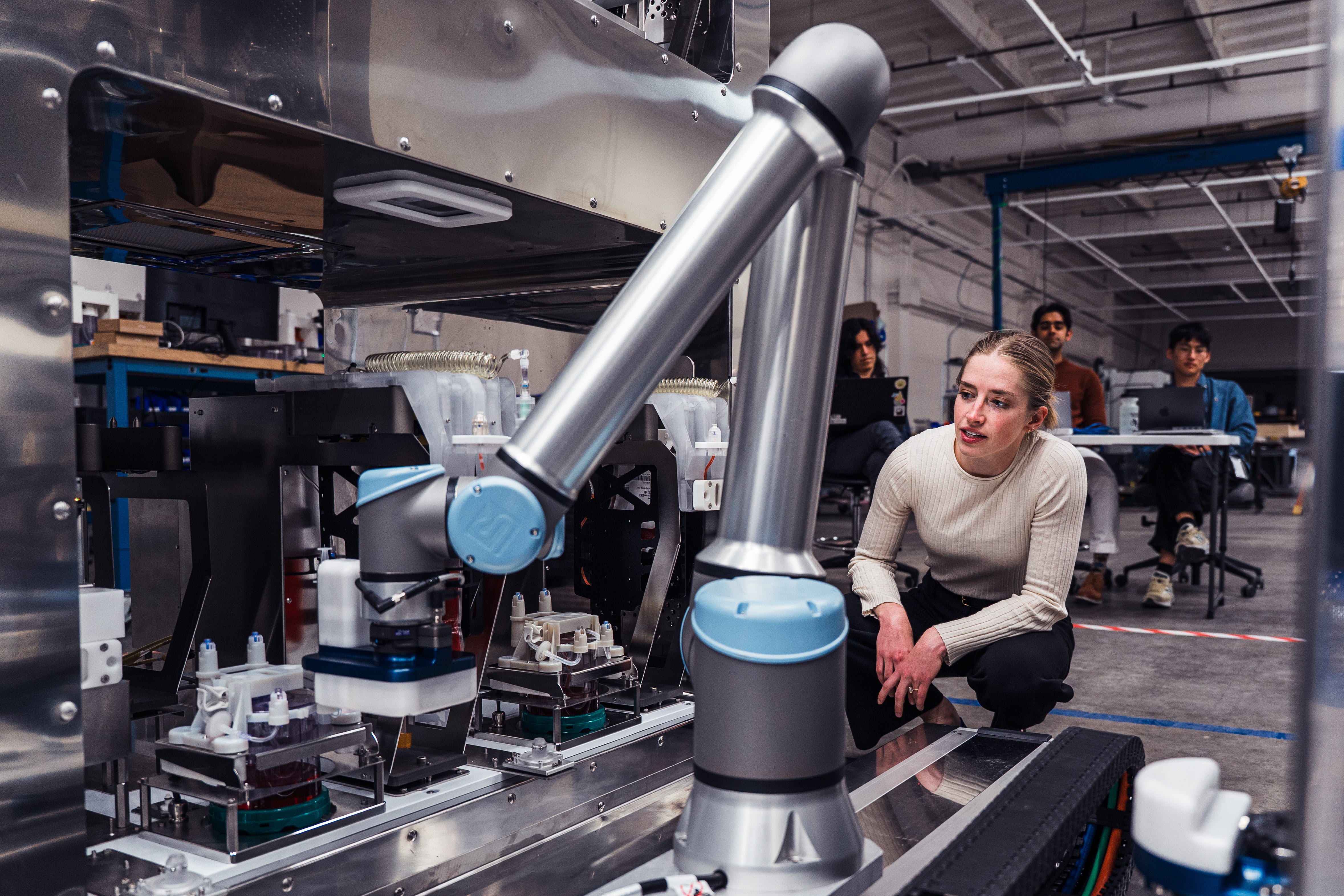
In pharmaceuticals, changing the way a therapy is manufactured is not like swapping out a piece of software. Manufacturing processes are validated, regulated and deeply embedded into how a drug is produced. The winning automation platform therefore may not be the one that asks the industry to redesign everything around it. It may be the one capable of adapting robotics to the messy reality that already exists.
The opportunity is much larger than replacing labor.
Our thesis was that as medicine becomes more complex, manufacturing itself becomes a massive bottleneck.
And if that is true, the factory starts to matter almost as much as the drug.
Multiply has spent the past several years turning that thesis into real infrastructure. Its announced pharmaceutical collaborators include AstraZeneca, Legend Biotech and Kyverna Therapeutics, and its systems are now being deployed inside pharmaceutical manufacturing environments.
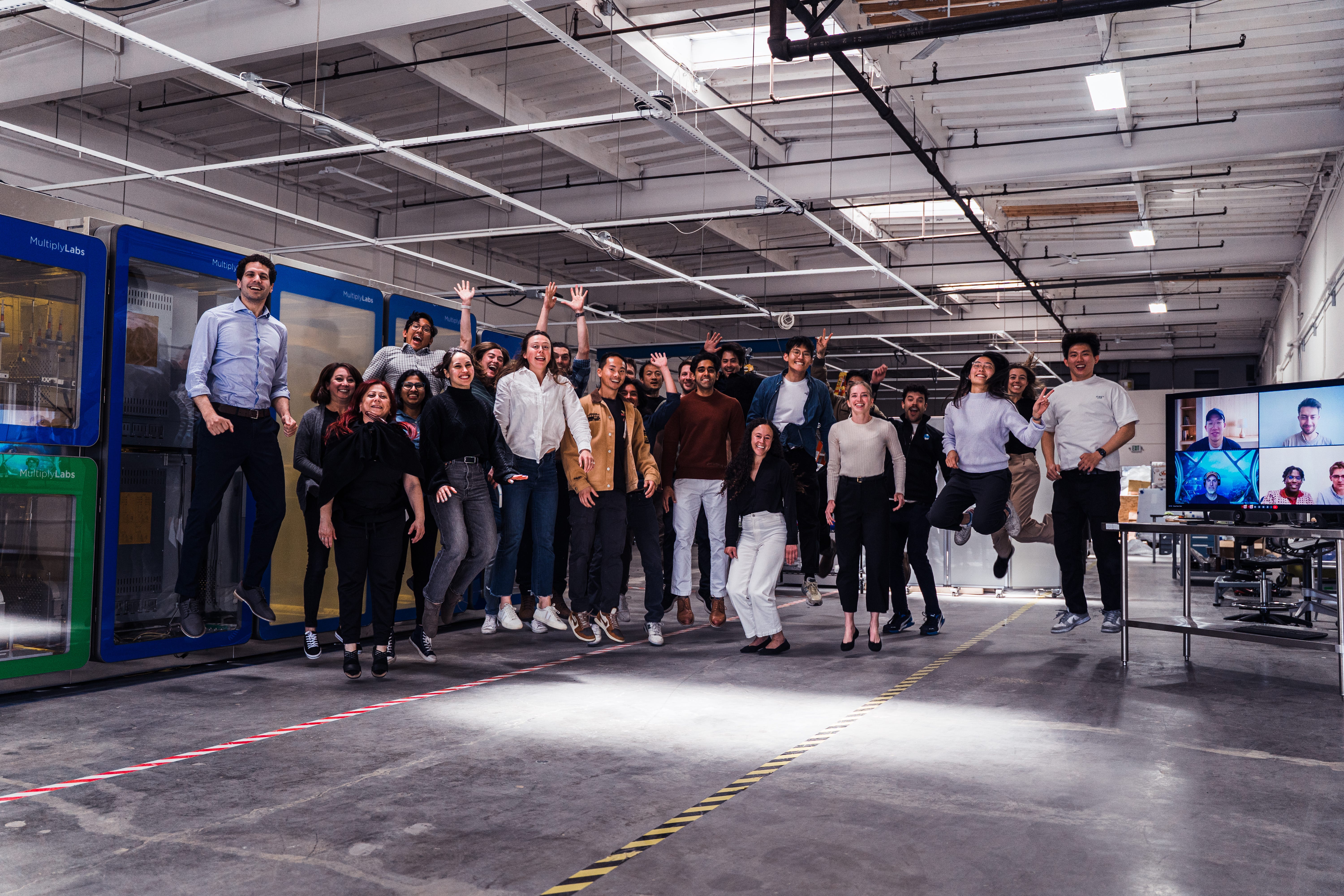
Step into Multiply Labs’ workshop in Dogpatch and it feels familiar to me: part hardware lab, part robotics shop. Engineers work around robotic arms and test fixtures; dexterous mechanical hands sit on workbenches beside half-built systems.
But Multiply is going industrial.
You can see it in the mix of people on the floor: young robotics engineers working alongside seasoned operators like Enrico Antonio Racca, previously Head of Supply Chain and Manufacturing at Ferrari’s Formula One, thinking about supply chains, assembly, and reliability.
Formula One to biopharma sounds like an unusual jump. But the problem is surprisingly similar: taking an extraordinarily complex, high-precision machine and figuring out how to build it repeatedly, reliably, and at scale.
Today, Multiply announced a $75 million Series B, led by serial biotech entrepreneur Dr. Patrick Soon-Shiong and NantWorks, with AstraZeneca, Lingotto, Teradyne and Strange Ventures among the new investors, alongside returning investors including Casdin Capital, Lux Capital and Founders Fund. The company plans to use the capital to increase robot production and move from clinical-stage deployments toward commercial manufacturing.
And the ambition is expanding.
Cell therapy is the first proving ground, but the same manufacturing problem exists across a much broader class of biologic medicines. The future vision of Multiply Labs is to extend the platform into other advanced biologics.
Over the last few decades, enormous amounts of technology and capital have gone into finding better medicines. The next generation of those medicines will be more personalized, more biological and often much harder to manufacture.
Multiply Labs is betting that the bottleneck isn’t in discovery, but in manufacturing them so they get into the hands of those who need them.