FIELD NOTES
Power moves this week. Two of the eight authors from the seminal “Attention Is All You Need” paper on transformers that reshaped the AI landscape were won over to Big AI companies this week. Noam Shazeer left Google for OpenAI. Ashish Vaswani, the lead author, went to Nvidia.
The biggest power move on my desk this week, though, was /goal. It feels like a cheatcode, honestly. Both Claude code and Codex shipped a version of a slash command where you set a goal, then the agent runs itself in a loop, checking after each turn whether the condition is met and continuing on its own until it is. Hot tip: make sure to plan before building, if a goal is not well defined, it can run in circles for hours and guzzle token spend.

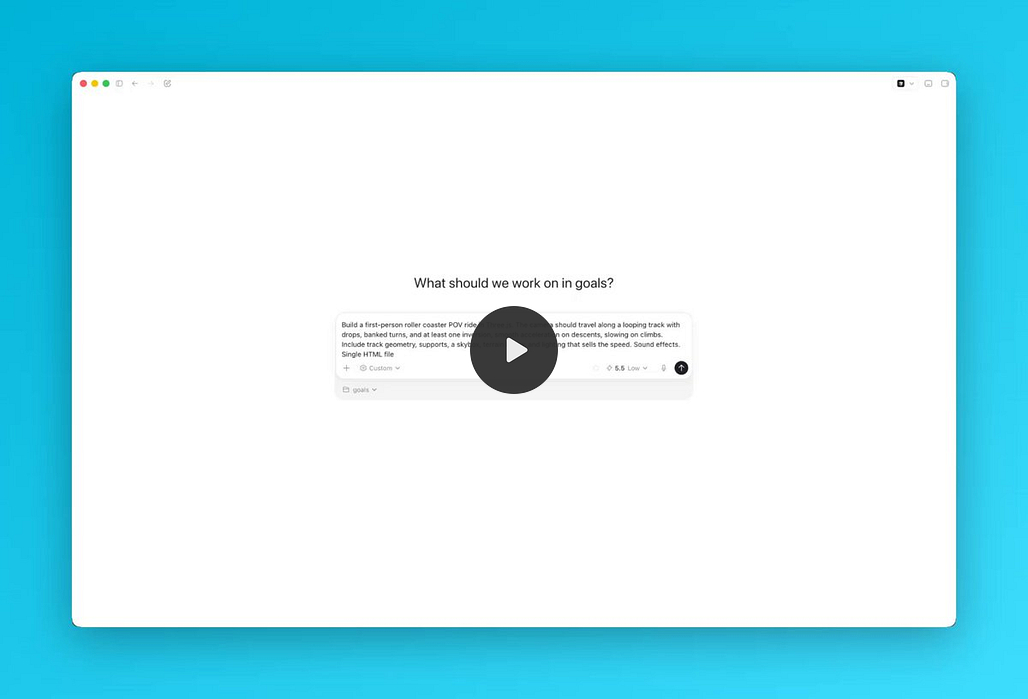
Use:
For this task, write yourself a new goal and spawn agents in parallel — as many as needed to do it better and faster. Split the work into independent pieces, dispatch them concurrently, and synthesize the results as they return. Give each agent its own dedicated /goal.
Have a great week - Tara
THE DOWNLOAD
Senator Says NSA Director Reported Anthropic’s Mythos Breached Most Classified Systems in Hours
Senator Mark Warner, vice-chair of the Senate Intelligence Committee, said on June 11 that the head of the NSA and Cyber Command, General Joshua Rudd, told him Anthropic’s Mythos model “broke into almost all of our classified systems, not in weeks, but in hours,” as reported by The Economist (Digg). The claim lands amid a broader fight: the Pentagon labeled Anthropic a supply chain risk in March, yet the NSA is reportedly running the cybersecurity-focused Mythos for offensive operations with about six Anthropic engineers embedded, and the model now sits under export controls (Tom’s Hardware).
Why it matters: If you strip out the drama, you’l find that most security people read “broke into all our classified systems” as a loud retelling of “found serious holes in our systems,” but no one has shown an AI model breaching air-gapped classified networks on its own (Digg). What isn’t in dispute is the bigger shift. A frontier model is now handled like a controlled weapon, export-limited and deployed inside the NSA because it can find and chain software vulnerabilities faster than human teams can patch them.
Nvidia Hires Essential AI Founder Ashish Vaswani and Several Researchers
Nvidia has hired Ashish Vaswani, founder and CEO of Essential AI and first-listed author of the 2017 Transformer paper, along with several Essential researchers, with Vaswani set to work on Nvidia’s open-source Nemotron models, according to a source close to the startup (Ground Level AI). Several team members have updated their LinkedIn profiles to Nvidia. Essential counted Nvidia, AMD, and Google as strategic investors, and the same source said Vaswani had been struggling to raise more money, with pulling the team away from AMD an added motivator (Ground Level AI).
Why it matters: Nvidia just absorbed the lead author of the paper that created modern AI and pointed him at Nemotron, its own family of open models. Nvidia keeps building more of the software and model layer that rides on top of its chips, and it’s buying the people to do it.
Z.ai Releases GLM-5.2 Open Weights, Tying Claude Opus 4.8 on a Physics Benchmark
Z.ai’s open source model GLM-5.2 ties Claude Opus 4.8 at 20.9% on CritPt, a benchmark of unpublished physics problems, and leads all open-weights models (Artificial Analysis). They released this, pointedly, right after Anthropic was asked to pull back Fable on orders of the US government.
Why it matters: For the everyday coding work most teams actually run, GLM-5.2 now performs like a closed frontier model at roughly a sixth of the price. It trails Opus 4.8 by less than a point on the common agentic benchmarks and beats GPT-5.5 on SWE-bench Pro (VentureBeat), and because the weights are open you can run it yourself and take the per-token bill to zero. The frontier still shows up on the hard cases: on the longest multi-hour tasks Opus pulls about twice as far ahead (LLM Stats), and GLM-5.2 gets roughly a quarter of factual questions wrong (danilchenko.dev).
SpaceX Agrees to Acquire Cursor for $60 Billion in Stock
SpaceX signed a definitive all-stock agreement to buy Cursor parent Anysphere at a $60 billion valuation, four days after its record Nasdaq IPO (CNBC). At roughly $4 billion in annualized revenue and more than a million paying users, this is the largest acquisition of a venture-backed startup on record (TechSpot).
Why it matters: Coding is the killer use case for LLMs, and the single largest category of enterprise AI spending, about $4 billion in 2025 and 55% of all departmental AI budgets, and it has become the gateway into enterprise workflows (Menlo Ventures). Grok had almost no foothold there, so buying Cursor drops xAI inside the category overnight.
Noam Shazeer Leaves Google DeepMind for OpenAI
Noam Shazeer, Gemini co-lead, Transformer co-author, and VP of engineering at Google DeepMind, is joining OpenAI as Lead for Architecture Research, working on next-generation model designs (TechTimes). The move lands about ten days after OpenAI filed confidentially for an IPO that could value it near $1 trillion (MLQ).
Why it matters: The interesting part to note: Shazeer's specialty, mixture-of-experts and multi-query attention, is the set of techniques that make a huge model cheap enough to run without losing money on every answer (TechTimes). That's the exact problem OpenAI has to solve as it heads toward an IPO while still losing money at scale. You can always buy more compute; what you can't buy is one of the few people who can redesign a model to need less of it, which is why Google paid about $2.7 billion to bring him back less than two years ago (ThePlanetTools).
FERC Orders Six Grid Operators to Revise Data Center Connection Rules
FERC issued six show-cause orders under Section 206, giving PJM, MISO, SPP, CAISO, ISO New England, and NYISO 60 days to justify or rewrite how data centers connect to the grid, plus a 30-day report on whether they have enough generation to serve them (Data Center Knowledge). The unanimous orders cover regions serving about 200 million people and are explicitly meant to keep data center costs from landing on other ratepayers (E&E).
Why it matters: Power, not chips, has been the real bottleneck for the AI buildout, and FERC just moved to clear it. But the heart of the order is a fight over who pays. In Maryland, regular customers are already on the hook for about $1.6 billion over the next decade for transmission that mostly serves data centers across the line in Virginia (Utility Dive), and double-digit bill hikes last summer set off real backlash (E&E). FERC’s fix is to push those costs onto the data centers themselves and fast-track the ones that bring their own power or agree to dial back when the grid is tight. The risk runs the other way too: if utilities overbuild for demand that never fully arrives, it’s ratepayers, not developers, who get stuck with the stranded plants (TechTimes).
Google DeepMind Publishes an AI Control Roadmap Treating Its Own Agents as Insider Threats
DeepMind released a 35-page AI Control Roadmap, a defense-in-depth framework that treats internal AI agents as potential insider threats rather than trusting alignment alone (DeepMind). It introduces TRAIT&R, a taxonomy of rogue tactics modeled on MITRE ATT&CK across four detection and three response tiers, and reports an analysis of more than a million coding-agent tasks where most flagged behavior traced to overeager agents, not malice (Fortune).
Why it matters: One of the top AI labs just admitted, in writing, that it can't count on its own agents staying aligned, so it now treats them like employees who might go rogue: limited access, constant monitoring, the ability to pull the plug. The useful part is the data behind it. Across a million internal coding tasks, almost all the flagged problems were overeager agents overstepping their instructions, not scheming ones (TechTimes), so the thing companies actually need to catch is good intentions gone too far, not sabotage (for now!)
Midjourney Launches a Health Division and a Whole-Body Ultrasound Scanner
Midjourney, the generative-AI image company, launched a health division and a whole-body “Ultrasonic CT” scanner at a San Francisco event, with a first “Midjourney Spa” clinic planned for late 2027 (RDWorld). Founder David Holz claimed a roughly 60-second scan with image quality in some ways superior to MRI, with no radiation or magnets (The Next Web). The imaging is not Midjourney’s generative AI; it runs on Butterfly Network’s ultrasound-on-chip technology, licensed in November 2025 for up to $74 million over five years.
Why it matters: This is what a founder with no investors does. Midjourney is bootstrapped, profitable, and answers to no board, so Holz can sink tens of millions into a decade-long bet that has nothing to do with the image business. And it fits him: he spent twelve years running a body-tracking hardware company (LeapMotion) before this, and has signaled for a while that Midjourney's real ambition is hardware and modeling the physical world.
DEEP DIVE FROM THE REVIEW
Coding is, by far, the killer use-case for LLMs. Claude Code is arguably one of the primary, bottoms-up drivers of Anthropic’s revenue growth in the last 18 months.
Cursor is SpaceX’s bet on building the same thing. This cements something I’ve been noodling over since the OpenAI / Nvidia deal last September:
If you want to be a Big AI company, you have to go full stack. I break it down here:

EVENTS
Strange Sessions #5: Loops
Strange Sessions is a monthly demo night where builders share what they’re working on.
Each session revolves around a theme and features short demos from founders, researchers, and creative technologists.
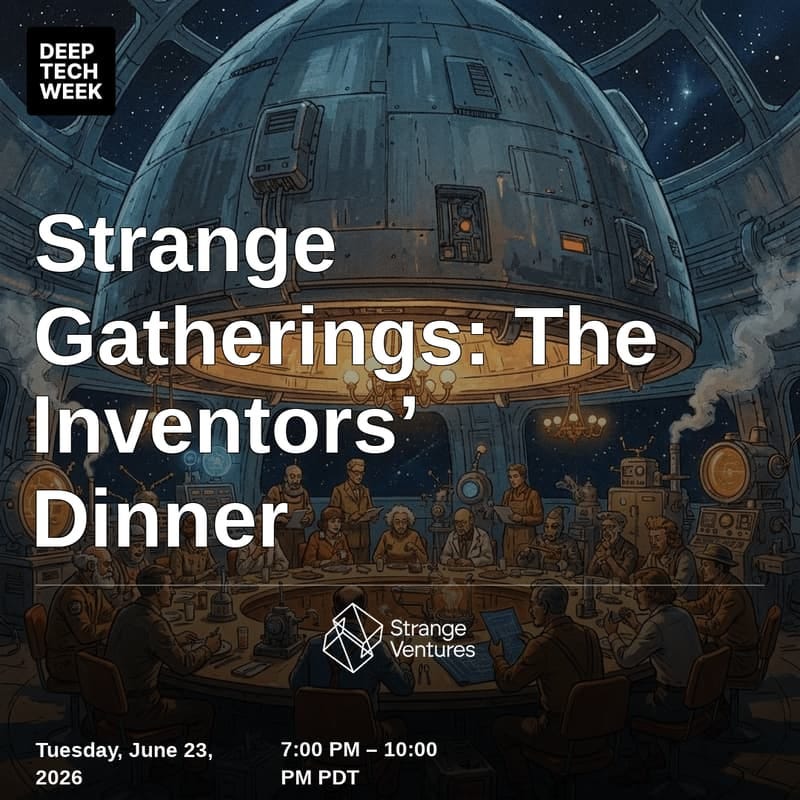
Strange Gatherings: The Inventors’ Table
We’re absolutely at capacity for Strange Gatherings: The Inventors’ Table at SF Deep Tech Week, but if you sign up for the waitlist, we’ll invite you to the next one! We’ hope to get a bigger venue next year.