


Research firm IDC predicts 1.3 billion AI agents by 2028.
I think that’s an underestimation by orders of magnitude.
I somehow love that it wasn’t a big AI company that showed the way to an agentic future. It was an open source project, Clawdbot, Moltbolt, now called OpenClaw, that closed the last mile in autonomous, agentic experiences.
This weekend, while sitting on a beach with my kids, I built and shipped a dashboard dissecting at SFUSD budgets from my phone. Over the last week itself, I’ve built a private data room (skirting the need for a $65/month Docsend subscription) and started building my own portal for internal Strange Ventures stuff.
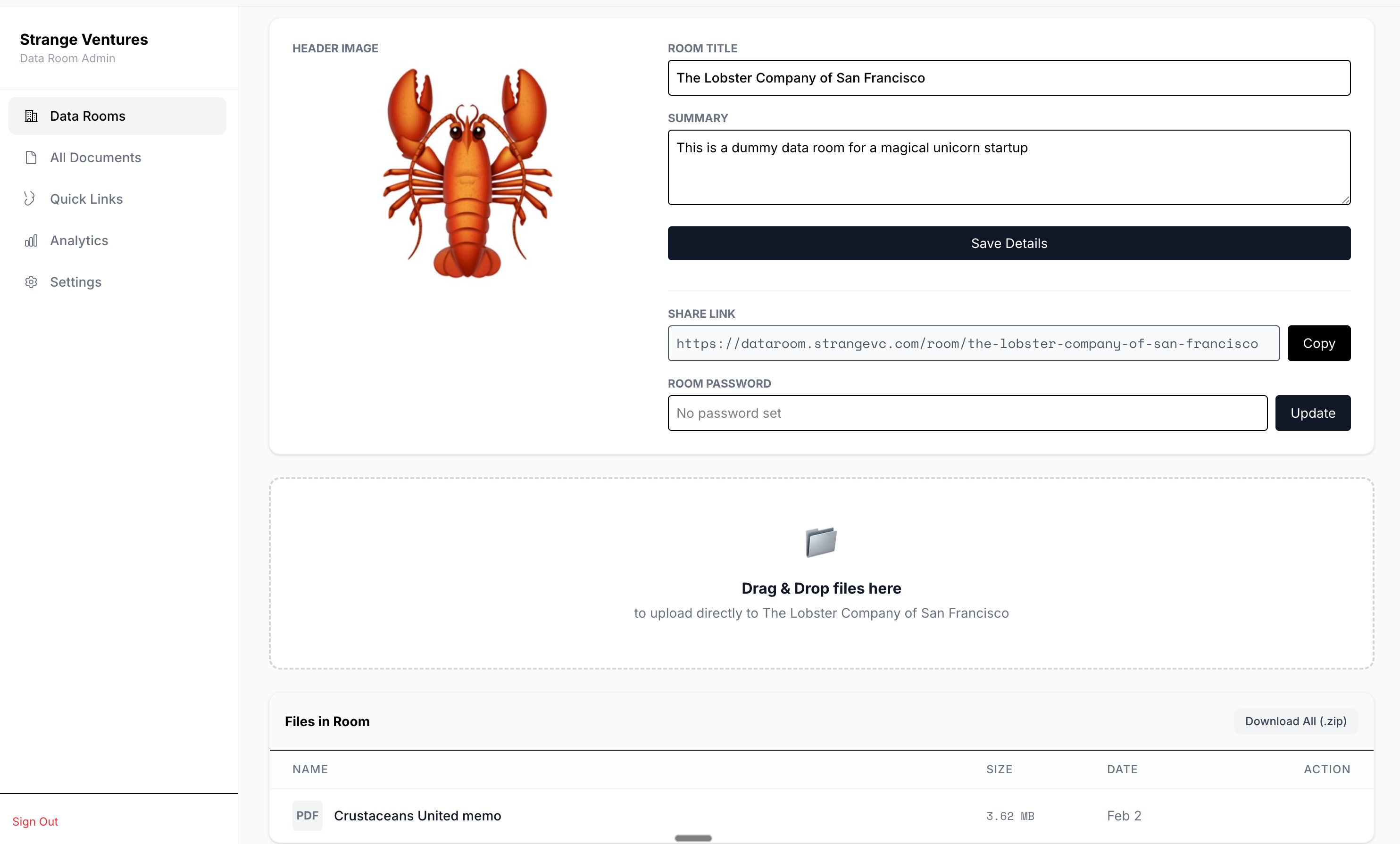
I’ve gotten from concept to deployment in mere hours.
Anyone comparing this to how “low code” or “no code” was overhyped and never really adopted by the mainstream… needs to take a long look at themselves.
Yes, the Big Labs Have Swarm Tech. But They’re Keeping It Behind Walls.
The major AI labs have all built multi-agent swarm architectures. None of them are accessible to regular developers or consumers yet.
Kimi K2.5 (Moonshot AI)
Self-directs an agent swarm of up to 100 sub-agents
Executes parallel workflows across up to 1,500 coordinated tool calls
For now: In beta but available if you host your own model.
Gemini Deep Think (Google)
Google’s first multi-agent model that spawns parallel reasoning agents
For now: Multi-agents for reasoning, but they aren’t general purpose.
Claude Swarms (Anthropic)
Instead of a single AI coder, you talk to a team lead that plans, delegates, and coordinates
Spawns specialists who work in parallel, share a task board, and message each other
For now: Hidden feature flag estimated to be released soon (hat tip Mike Kelly)
OpenClaw can run on a Raspberry Pi or a Mac Mini or come pre-installed on Molt Boxes (mini PCs) made by enterprising ShenZhen devs. And it’s open source.
Now I’m Exploring: Multi-Agent Teams
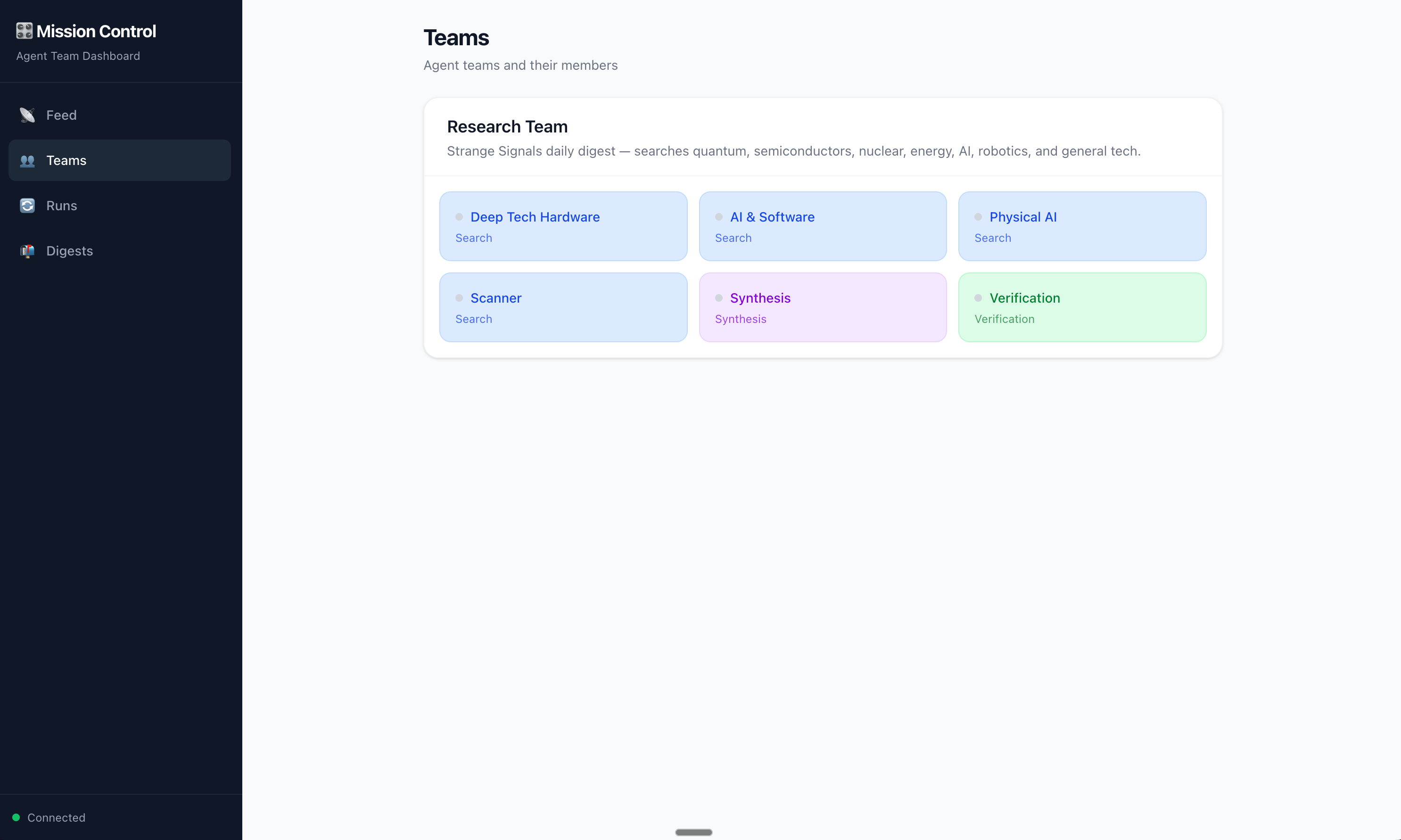
In the spirit of “learn by doing,” I’m now starting to build multi-agent teams. These are agent squads or swarms that have persistent memory, work together across a shared database, and have an orchestrator agent that delegates, tests, queues up tasks, and looks for work to do.
To start, I’m running two teams (a peek at the research one below)
Research Team:
Search agent
Synthesis agent
Verification agent
Product Team:
Development agent
Data update agent
Feedback & support agent
Analytics agent
I found this orchestration writeup by Bhanu Teja helpful!
Next Exploring: Autonomous Multi-Agent Teams
The next step will be building fully autonomous, self-reinforcing agent systems.
For me, that means designing systems where agents can learn, adapt, and coordinate without human intervention. They will monitor their own performance, identify new tasks, and improve their workflows over time.
This is where it gets strange. And where it gets real.
Field Thoughts
1. Single-Player SaaS Becomes Hard to Stomach
Without collaborative elements (e.g. data or other benefits from multi player modes), single-player SaaS feels redundant.
The survivors will have:
Data moats: proprietary patterns agents can’t replicate
Network effects: value that compounds with users
Deep integrations: becoming infrastructure, not application
2. Multi-Agent Teams Are the Future
This will be true for enterprises as well as one-person businesses.
3. Every Business Will Interact Through an Orchestrator Agent via Chat
The interface of the future will be conversation. I don’t do any fancy prompt engineering or complex setups. I talk to my agents as I would to a human.
The orchestrator agent becomes the single point of contact. Routing to billing agents, support agents, research agents, development agents. The human talks to one thing. The one thing coordinates everything else.
4. Security Will Be a Serious Problem as Agents Run Amok
This is the shadow side.
Already happening. Many ahve even injected malware into an OpenClaw skill. Prompt injection can turn your trusted agent into a malicious insider.
Not an ad
Curious but no time to mess around with virtual cloud servers or Mac Minis?
I’m building OpenClaw-as-a-Service for 10 friends, with:
Secure enclave
Private phone number (to work with the agent via Whatsapp, iMessage, Slack)
GitHub integration
Dev accounts (its own)
Private servers
If you’re interested in learning more, please jump on the waitlist!
Where can I sign up for the waiting list?!
And, where do I sign up for the waiting list pls?