


Coding agents are generating more code than existing infrastructure was built to handle.
GitHub’s busiest month for code pushes in 2025 was August, at just under 100 million. By early 2026, that number had reached 1.4 billion, a +1300% increase.
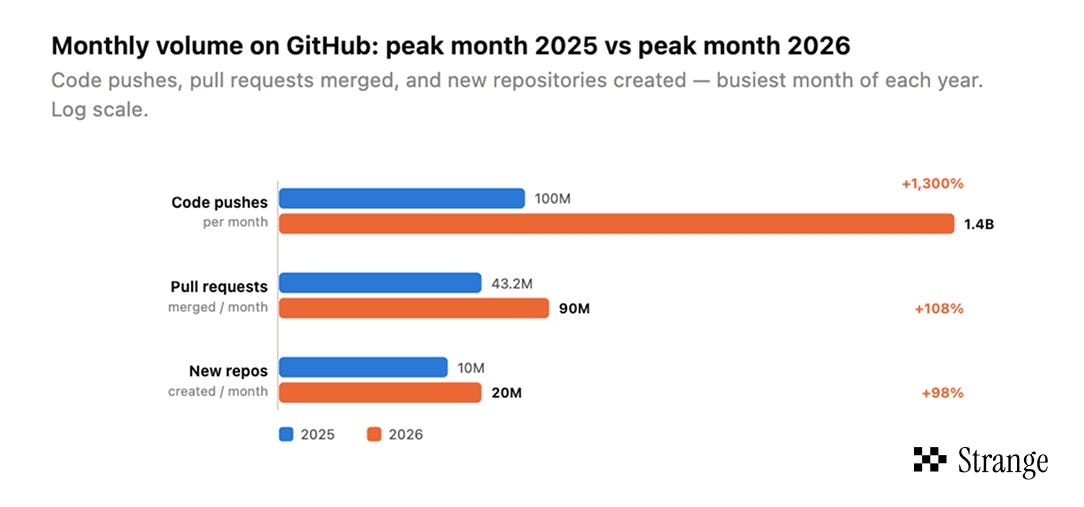
GitHub is clearly feeling the strain.
Monthly incidents nearly doubled after November 2025.
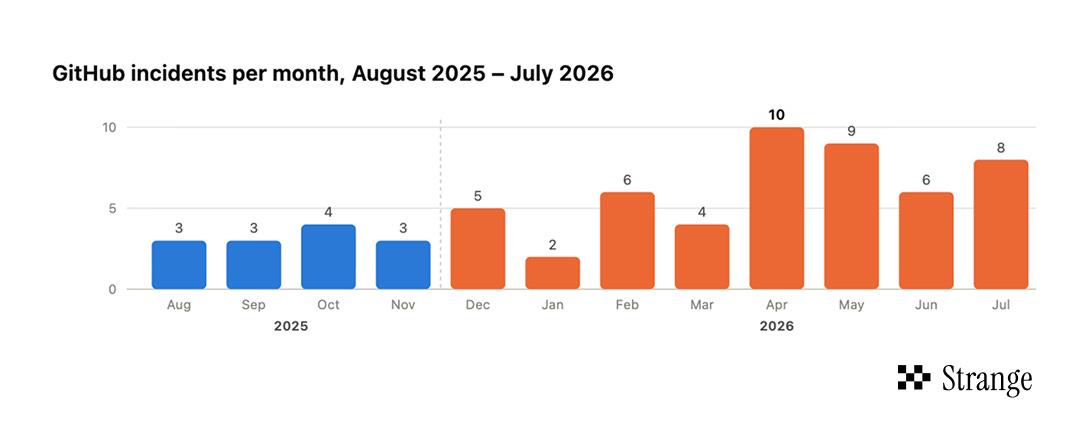
Now new infrastructure is appearing around it.
Cursor launched Origin this week, its own code-hosting system built for what it calls “millions of tiny repositories created by agents.”
GitLab is rebuilding its backend so agents can query repositories without cloning them, with Anthropic as a design partner. Zed is experimenting with continuous delta streams instead of traditional commits. Former GitHub CEO Thomas Dohmke raised $60 million to build repository infrastructure for fleets of coding agents.
The interesting part is that GitHub hasn’t been displaced.
It has 225 million users and is used by more than 90% of the Fortune 500. Every major coding agent still works with it. Even Cursor’s Origin still sends code back to GitHub. As Cursor puts it, GitHub remains the “source of truth.”
So for now, coding agents aren’t replacing GitHub.
They’re creating a new infrastructure layer around it.
But does that layer remains an extension of GitHub, or eventually becomes its replacement?